
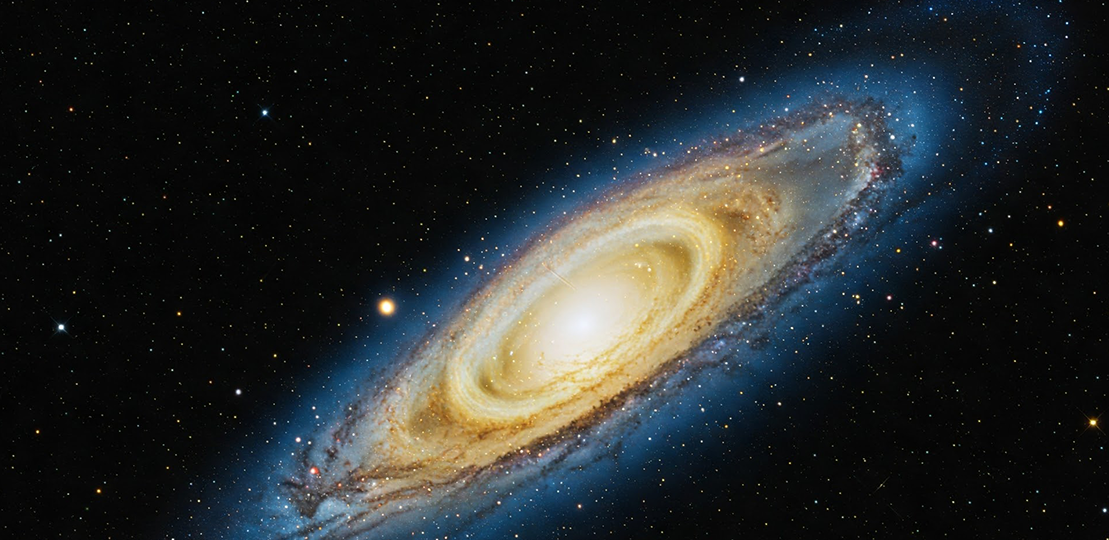

Washington D.C. – In a groundbreaking announcement that has sent ripples of excitement through the astronomical community, the International Space Agency (ISA) today unveiled its ambitious new mission: “Project Circulus,” an in-depth exploration of the enigmatic Hoag’s Object. This peculiar ring galaxy, a cosmic oddity featuring a bright, circular core surrounded by a distinct ring of stars with a vast, seemingly empty gap in between, has long fascinated scientists.
“Hoag’s Object presents a unique puzzle in the grand tapestry of the universe,” stated Dr. Alistair Chen, Director-General of the ISA, during a press conference held at the agency’s headquarters. “Its unusual structure challenges our current understanding of galaxy formation and evolution. Project Circulus is our bold endeavor to unravel its secrets and gain unprecedented insights into the dynamics of galactic systems.”
The mission, slated for launch in the mid-2030s, will involve sending a state-of-the-art, multi-instrumented spacecraft, tentatively named the Aperture, on a multi-year journey to the distant galaxy, located approximately 600 million light-years away in the constellation Serpens. The Aperture will be equipped with advanced imaging systems operating across a wide spectrum of light, high-resolution spectrographs to analyze the composition and motion of stars and gas, and powerful magnetic field sensors.
Key objectives of Project Circulus include:
- High-Resolution Imaging: Capturing the most detailed images ever obtained of Hoag’s Object, revealing subtle structures within the core and the ring, and searching for any faint connecting material.
- Compositional Analysis: Determining the precise stellar populations, gas content, and dust distribution in both the core and the ring to understand their formation histories.
- Kinematic Studies: Mapping the velocities of stars and gas within the object to understand its rotational dynamics and search for evidence of past interactions or mergers.
- Magnetic Field Mapping: Investigating the magnetic field structure of Hoag’s Object, which could provide clues about its formation and the role of magnetic fields in galaxy evolution.
- Searching for Interlopers: Examining the seemingly empty gap between the core and the ring for any faint dwarf galaxies, star clusters, or other matter that might offer clues to the object’s unusual morphology.
The ISA emphasized the collaborative nature of Project Circulus, highlighting the involvement of scientists and engineers from numerous member nations. Several leading research institutions have already signed on to participate in data analysis and scientific interpretation.
“This mission is a testament to the power of international cooperation in pushing the boundaries of human knowledge,” commented Dr. Evelyn Reed, lead astrophysicist for the project. “Hoag’s Object is a cosmic enigma that demands a concerted effort to understand. We believe that the data gathered by the Aperture will revolutionize our understanding of ring galaxies and potentially challenge some of our fundamental assumptions about how galaxies form and evolve.”
The development phase of Project Circulus is already underway, with teams working on the spacecraft design, instrument development, and mission planning. The ISA anticipates releasing further details about the mission’s timeline and specific scientific instruments in the coming years.
The announcement of Project Circulus has been met with enthusiasm by astronomers worldwide. Dr. Kenji Tanaka, a renowned expert in galaxy dynamics at the Tokyo Astronomical Observatory, stated, “Hoag’s Object has always been a tantalizing target. This dedicated mission by the ISA promises to unlock its secrets and provide invaluable insights into the diverse and often surprising structures we find in the universe.”
As Project Circulus moves forward, the world will be watching with anticipation, eager to witness the unfolding story of this extraordinary cosmic ring and the knowledge it will undoubtedly yield about the vast and wondrous universe we inhabit.