
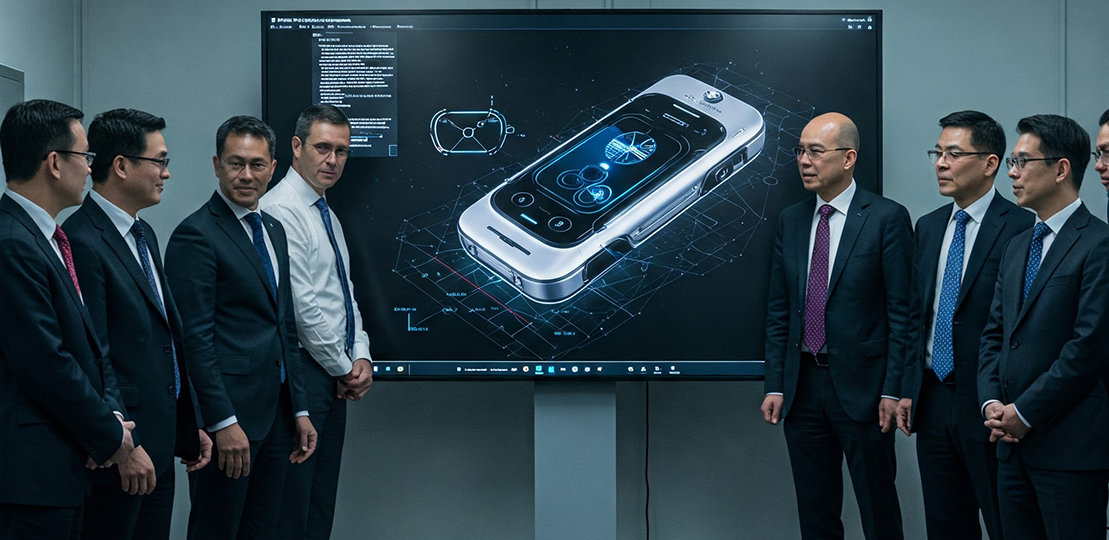

Silicon Valley, CA – April 19, 2025 – The technology landscape is bracing for a seismic shift following today’s highly anticipated announcement from industry titan InnovateX. In a live-streamed event that drew millions of viewers worldwide, CEO Anya Sharma unveiled “Aura,” a revolutionary new device poised to redefine personal technology and potentially disrupt several existing markets.
While details surrounding Aura were kept tightly under wraps leading up to the launch, Sharma’s presentation painted a picture of a seamless, intuitive, and deeply personalized technological companion. Described as a “cognitive interface,” Aura appears to move beyond traditional smartphones, smartwatches, and even augmented reality glasses, offering a novel way for users to interact with the digital world and their physical surroundings.
“For years, we’ve been tethered to screens, navigating complex interfaces,” Sharma stated, her voice filled with conviction. “Today, InnovateX is proud to introduce a technology that adapts to you, anticipates your needs, and integrates seamlessly into the fabric of your life.”
The demonstration showcased several key features of Aura that hint at its disruptive potential:
- Neural Integration (Non-invasive): Perhaps the most groundbreaking aspect is Aura’s ability to understand and respond to user intent through subtle neurological signals. While Sharma emphasized that the technology is entirely non-invasive, the demonstration showed Aura anticipating actions, providing relevant information, and executing commands seemingly without direct physical input. This could revolutionize how we interact with devices, moving beyond touchscreens and voice commands.
- Adaptive Reality Layer: Aura appears to project a dynamic and context-aware layer of information onto the user’s perception of reality. This isn’t simply augmented reality overlays; instead, Aura intelligently curates information, highlights points of interest, and provides real-time assistance based on the user’s environment and current tasks. Imagine walking through a city and having relevant historical facts appear subtly overlaid on landmarks, or receiving step-by-step instructions projected onto your field of vision while assembling furniture.
- Personalized AI Assistant: At its core, Aura is powered by a highly advanced artificial intelligence that learns and adapts to individual user preferences and habits. This goes far beyond current virtual assistants, with Aura proactively offering solutions, managing schedules, and even anticipating emotional states to provide tailored support.
- Universal Connectivity: InnovateX claims that Aura will seamlessly integrate with a vast ecosystem of devices and platforms, breaking down existing silos between different technologies. This suggests a future where smart home devices, vehicles, and other connected technologies can be controlled and managed through Aura’s intuitive interface.
The implications of Aura’s technology are far-reaching. Analysts predict potential disruption across several sectors, including:
- Mobile Computing: Aura’s ability to offer a screen-less and more intuitive interaction model could challenge the dominance of smartphones.
- Wearable Technology: Smartwatches and other wearables may become redundant if Aura can seamlessly integrate their functionalities into its core experience.
- Human-Computer Interaction: The non-invasive neural interface could pave the way for entirely new forms of interaction with technology, impacting everything from gaming to professional applications.
- Artificial Intelligence: Aura’s advanced AI could set a new standard for personalized and proactive assistance, pushing the boundaries of what virtual assistants can achieve.
While InnovateX has yet to announce a specific release date or pricing for Aura, the company stated that it plans to roll out a developer program in the coming months, hinting at a potential launch within the next year. The anticipation surrounding this groundbreaking product is palpable, and the world waits to see if Aura truly lives up to its promise of ushering in a new era of personal technology. One thing is certain: the tech landscape will never be quite the same.