
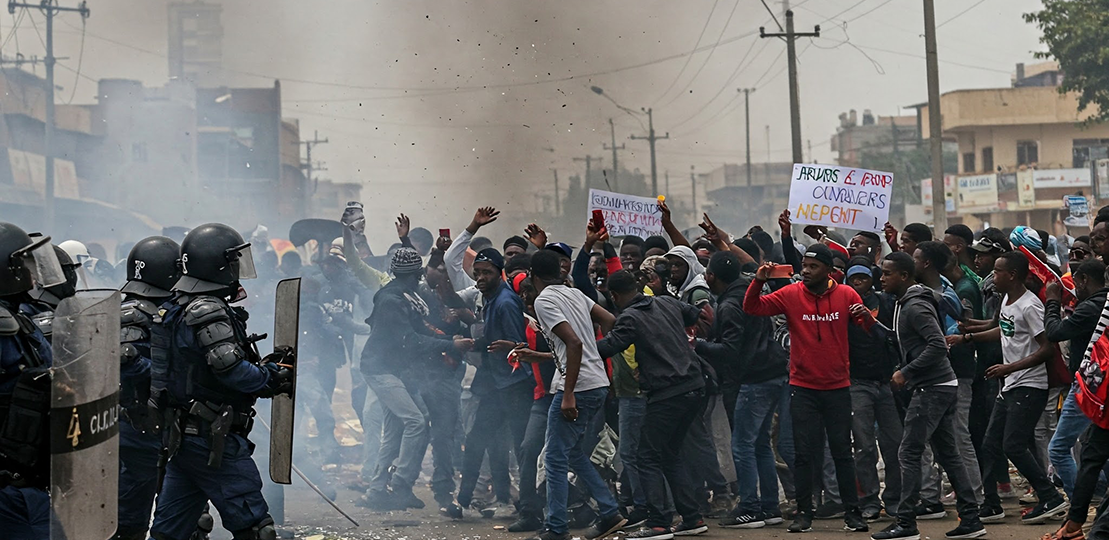

Political Instability Escalates in Chad Amidst Protests and Government Crackdown
N’Djamena, Chad – Political tensions in Chad have reached a boiling point as widespread protests erupt across the nation, met with an increasingly forceful response from the transitional government. The demonstrations, fueled by concerns over the slow pace of democratic transition, rising cost of living, and alleged human rights abuses, are posing a significant challenge to the leadership of General Mahamat Idriss Déby Itno.
The current wave of unrest can be traced back to the aftermath of President Idriss Déby Itno’s death in April 2021. His son, General Mahamat Déby, then head of the presidential guard, swiftly took power at the helm of a Transitional Military Council (TMC), initially promising an 18-month transition to civilian rule. However, this timeline has been repeatedly extended, sparking accusations of a power grab and eroding public trust.
Recent weeks have witnessed a significant uptick in protest activity, particularly in the capital N’Djamena and other major urban centers. Demonstrators, often organized by civil society groups and opposition parties, have taken to the streets demanding a swift return to constitutional order, the establishment of credible electoral processes, and accountability for past and present human rights violations. Slogans calling for an end to the military-led transition and the immediate organization of free and fair elections have become commonplace.
The government’s reaction to these protests has been met with growing international concern. Security forces have frequently deployed tear gas, water cannons, and live ammunition in attempts to disperse gatherings. Reports of arbitrary arrests, detentions, and violence against protesters have become increasingly frequent, raising serious questions about the respect for fundamental freedoms under the current administration.
“The level of repression we are witnessing is deeply alarming,” stated a spokesperson for a leading human rights organization based in the region. “The Chadian people have a right to peaceful assembly and to voice their political opinions without fear of retribution. The government must exercise restraint and ensure the safety and security of all citizens.”
The government, for its part, maintains that the protests are being instigated by opposition elements seeking to destabilize the country and undermine the ongoing transition process. Officials have defended the actions of the security forces, asserting that they are necessary to maintain public order and prevent violence. They have also reiterated their commitment to the transition, albeit at a pace deemed appropriate by the ruling authorities.
This escalating cycle of protests and government crackdowns is exacerbating an already fragile socio-economic situation in Chad. The country grapples with high levels of poverty, food insecurity, and the impact of regional conflicts. The political instability is further hindering efforts to address these pressing issues and attract much-needed international investment and aid.
International actors are closely monitoring the situation, with many calling for an inclusive national dialogue that involves all stakeholders, including the government, opposition parties, and civil society organizations. The African Union and various Western governments have urged the transitional authorities to uphold human rights, ensure freedom of assembly, and adhere to a clear and transparent timeline for the return to democratic rule.
The coming weeks and months will be critical for Chad. Whether the government will heed calls for greater political openness and dialogue, or continue down a path of suppression, will significantly shape the country’s future trajectory. The escalating political instability carries the risk of further fracturing Chadian society and undermining long-term prospects for peace and development in the region. The international community remains hopeful that a peaceful and inclusive resolution can be found to steer Chad towards a stable and democratic future.